Permalsteel
· Permalsteel · Guides · 8 min read
Brass Windows and Doors – The Architectural Language That Ages Beautifully
Brass doesn't try to stay new. It develops a patina, takes on character, and quietly becomes more valuable with time. Here's what makes brass windows and doors different from steel and aluminum — and what to consider when specifying them for a heritage home, boutique hotel, or luxury residence.
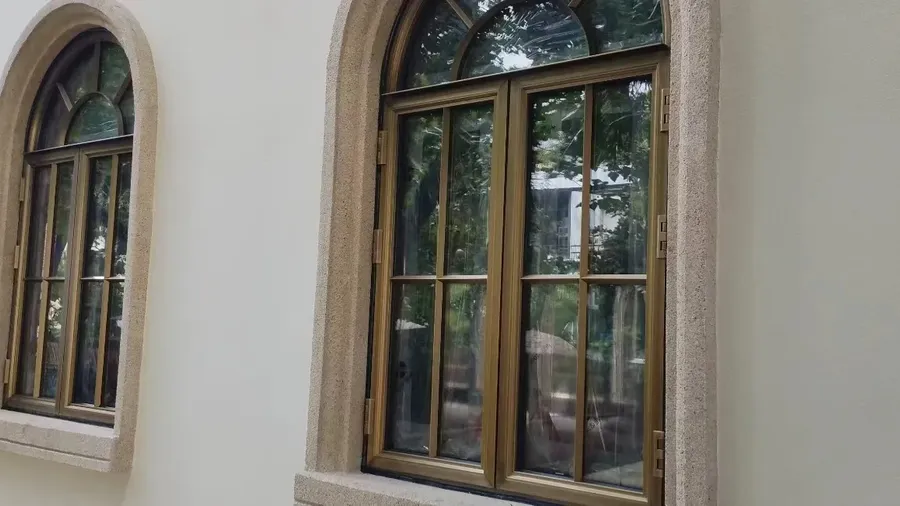
In the world of doors and windows, the material you choose does more than determine whether a frame is strong or weak. It shapes the building’s character and its relationship with time. Aluminum reads as youthful and modern. Steel is crisp, structural, and architectural. Brass is what discerning homeowners and developers turn to when they want a building to age well — to look better at year ten than at year one.
True quality does not rely on filters or finishes. It comes from the integrity, depth, and honesty of the material itself.
What makes brass different
Brass is a copper-zinc alloy, typically around 67% copper and 33% zinc, with small additions that tune its colour, strength, and corrosion resistance. That composition is the reason for the two traits people notice first:
- A warm, golden tone that no paint, plating, or powder coat can convincingly imitate.
- A living surface that responds to its environment — humidity, salt air, sunlight, touch — and develops a patina over years rather than degrading.
That second point is the one most specifiers underestimate. Most building materials try to freeze themselves in time. Brass does the opposite, and that is the point.
How brass ages — the patina story
A well-made brass window does not deteriorate. Instead, the surface slowly forms a thin, self-healing oxide layer — the patina — that actually protects the metal underneath. On a coastal façade this patina may lean toward a soft, weathered green; in a dry interior it stays closer to a deep antique bronze.
This is not a defect to be repaired. It is the material settling into itself.
Two practical consequences:
- No repainting, no re-anodising. A brass frame that is properly specified at the start rarely needs a refinish in its lifetime.
- Scratches are forgiving. Minor marks blend into the patina as the surface re-oxidises. The same scratch on a painted or anodised surface is a permanent blemish.
For owners who want a frame that looks honest at year twenty, this is the property that matters more than any catalogue spec.
Shapes and detailing that steel and aluminum can’t match
Brass is also chosen for shapes steel and aluminum rarely attempt on a custom build. The workhorse of any brass workshop is the ability to roll and form profiles into:
- Arched, semi-circular, and eyebrow windows that follow the curve of an original façade
- Heritage glazing bar patterns — true divided lites, astragal bars, and decorative muntins that read authentic rather than applied
- Ornamental detailing — carved motifs, hand-finished cornices, decorative transoms
- Fully custom geometries that follow a sketch rather than a catalogue number
This is the same set of capabilities that defines a real heritage window: not just the material, but the willingness to build one unit at a time against the wall it has to fit.
What goes inside a brass window
The beauty of a brass window is not skin-deep. The qualities that determine whether it will still be performing at year twenty are structural:
- Multi-chamber thickened profiles that resist warping under thermal cycling and wind load
- High-density sealing gaskets (EPDM or silicone) that maintain airtightness as the building moves seasonally
- Properly specified glazing — typically insulated double or triple glazing with low-E coatings where thermal performance matters
- Surface preparation matched to the environment — clear lacquered brass for stable interiors, unlacquered brass for exteriors where the patina is the point
A brass window specified this way is a quiet piece of engineering dressed in a beautiful material. Skip any of these and you end up with a frame that looks like brass but behaves like a cheaper one.
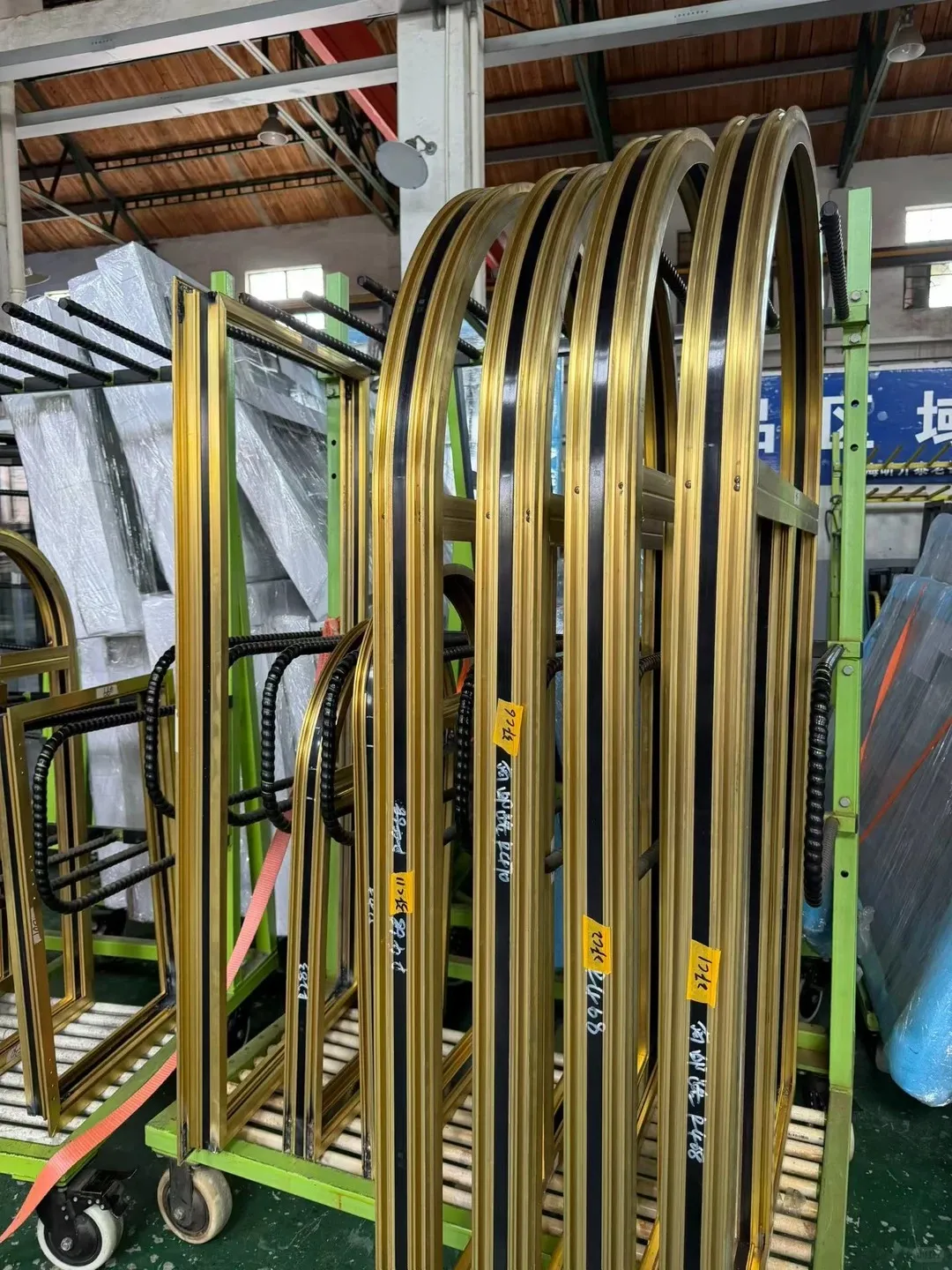
No rust, no fading — only richer character
A common question from clients who are new to brass: “Will it turn green? Will it look damaged?” The honest answer is that yes, the surface will change — and that is the feature, not the failure.
- Brass does not rust in the way ferrous metals do. The patina is protective, not destructive.
- The original colour does not fade. What happens is that the surface gains a deeper, more complex tone as it oxidises.
- For projects that want a stable bright finish, a factory-applied clear lacquer can hold the colour for many years. For projects that want the look to evolve, the brass is left to age naturally.
Neither choice is wrong. The mistake is specifying a “forever-new” surface in a material that is chosen precisely because it is not that.
Custom shapes and what they cost you
Custom brass work is not cheap, and pretending otherwise would not serve you well. Three things drive the cost:
- Material. Brass profiles are inherently more expensive than steel or aluminum extrusions of the same section.
- Craft. Most brass components are joined, formed, and finished by hand rather than mass-produced. Welds are dressed, joints are aligned, surfaces are brought to a consistent satin.
- One-off tooling. A custom arched window usually requires bending the profile to a specific radius, often a one-time setup that is amortised over a single project.
In return you get a window that fits the opening, matches the architecture, and ages in a way no catalogue window can.
Brass vs. steel vs. aluminum at a glance
| Factor | Brass | Steel | Aluminum |
|---|---|---|---|
| Aesthetic character | Warm, classical, ages into patina | Crisp, architectural, industrial | Clean, modern, commercial |
| Corrosion behaviour | Self-protecting patina | Coated; vulnerable if coating is damaged | Naturally corrosion-resistant |
| Custom shapes | Excellent (bent, formed, carved) | Very good | Limited (extrusion-driven) |
| Strength-to-weight | High | Very high | Moderate |
| Surface longevity | Decades; develops character | Decades; needs coating care | Decades; essentially maintenance-free |
| Typical cost vs. aluminum | Significantly higher | Moderate premium | Baseline |
The honest summary: choose brass when the frame is meant to be part of the building’s story, when the design requires custom curves or heritage detailing, and when long-term material character matters more than upfront cost.
Our brass capabilities
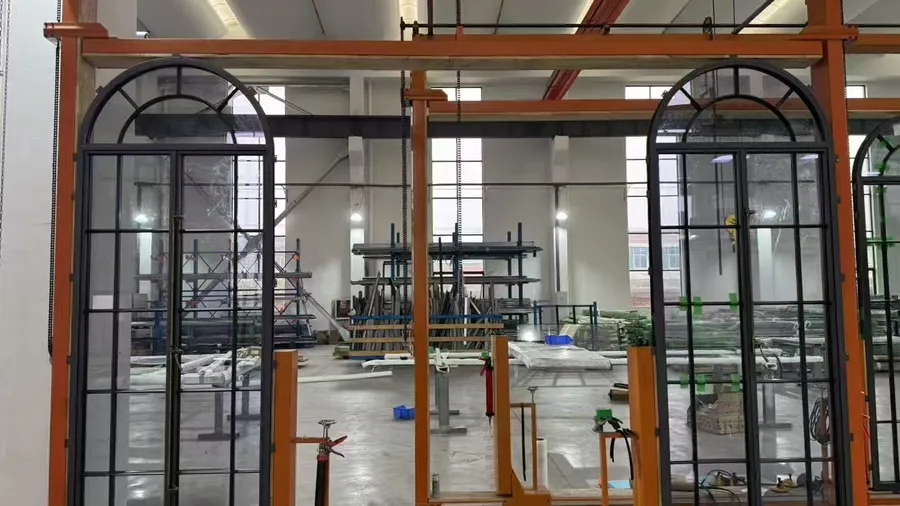
Permalsteel is a custom metal door and window manufacturer based in Shanghai, serving export projects to the United States, Australia, and other markets. Our factory is set up to produce made-to-order systems, including brass and brass-finished work, against customer drawings.
What we routinely handle on brass projects:
- Arched, circular, eyebrow, and other curved windows — bent to a specified radius from a sketch or reference image
- Heritage-style glazing bars and muntins in traditional and modern patterns
- Ornamental carved detailing for entrance doors and feature windows
- Thermally broken brass systems where the project also requires serious thermal performance
- Brass entrance doors and double-leaf doors in custom sizes and finishes
- Full customisation from design development and structural optimisation to surface finishing and export packing
Lead times and shipping follow the same process as our other export work: production typically runs eight to twelve weeks, sea freight adds roughly four to six weeks to the US West Coast or to Australia. Send us your drawings or reference images and we will confirm feasibility, lead time, and pricing for your specific project.
Brass windows for your project
If you are weighing brass for a heritage restoration, a boutique hotel, a luxury residence, or a commercial space that needs a frame with real character, the next step is straightforward.
Send us the opening dimensions, the type of building, any reference images or sketches, and the destination port. We will come back with feasibility, indicative pricing, and a proposed schedule. For most brass projects we are also able to produce a small sample of the proposed finish so you can see exactly how the material will read in the space.
Contact our team with your project details and we will prepare a tailored proposal.
Frequently asked questions
How long do brass windows last? A properly specified and finished brass window will easily outlast a comparable steel or aluminum unit. With the patina considered part of the design rather than a defect, the realistic service life is 50+ years, with no refinishing required.
Will brass windows turn green? Exterior brass will develop a patina over time, which can range from a warm antique bronze to a soft weathered green depending on climate. The patina is protective and does not damage the metal. If a stable bright finish is preferred, a clear lacquer can be applied at the factory.
Are brass windows expensive? Yes. Brass is more expensive than aluminum and typically carries a premium over steel as well, due to material cost and the hand-craft involved in custom shapes. Most clients see this as a one-time investment in a frame that becomes more valuable rather than less.
How do you maintain brass windows? Maintenance is minimal. Wash with mild soap and water occasionally, and avoid abrasive cleaners. For lacquered finishes, treat the surface gently so the lacquer is not scratched; for unlacquered finishes, allow the patina to develop naturally.
Can brass be used for both interior and exterior windows? Yes. Brass works equally well for interior partitions, feature windows, exterior façades, and entrance doors. The finish specification differs — interiors often use lacquered brass to hold a brighter colour, while exteriors are typically left to develop their own patina.